Renovation and new homes in Lake Dallas.
Lake Dallas grew as a lake-cottage town for weekend visitors, and many of those cottages became full-time homes. We renovate and enlarge them, update the small 1960s and 1970s houses near Main Street, and build new homes on the city’s infill lots.
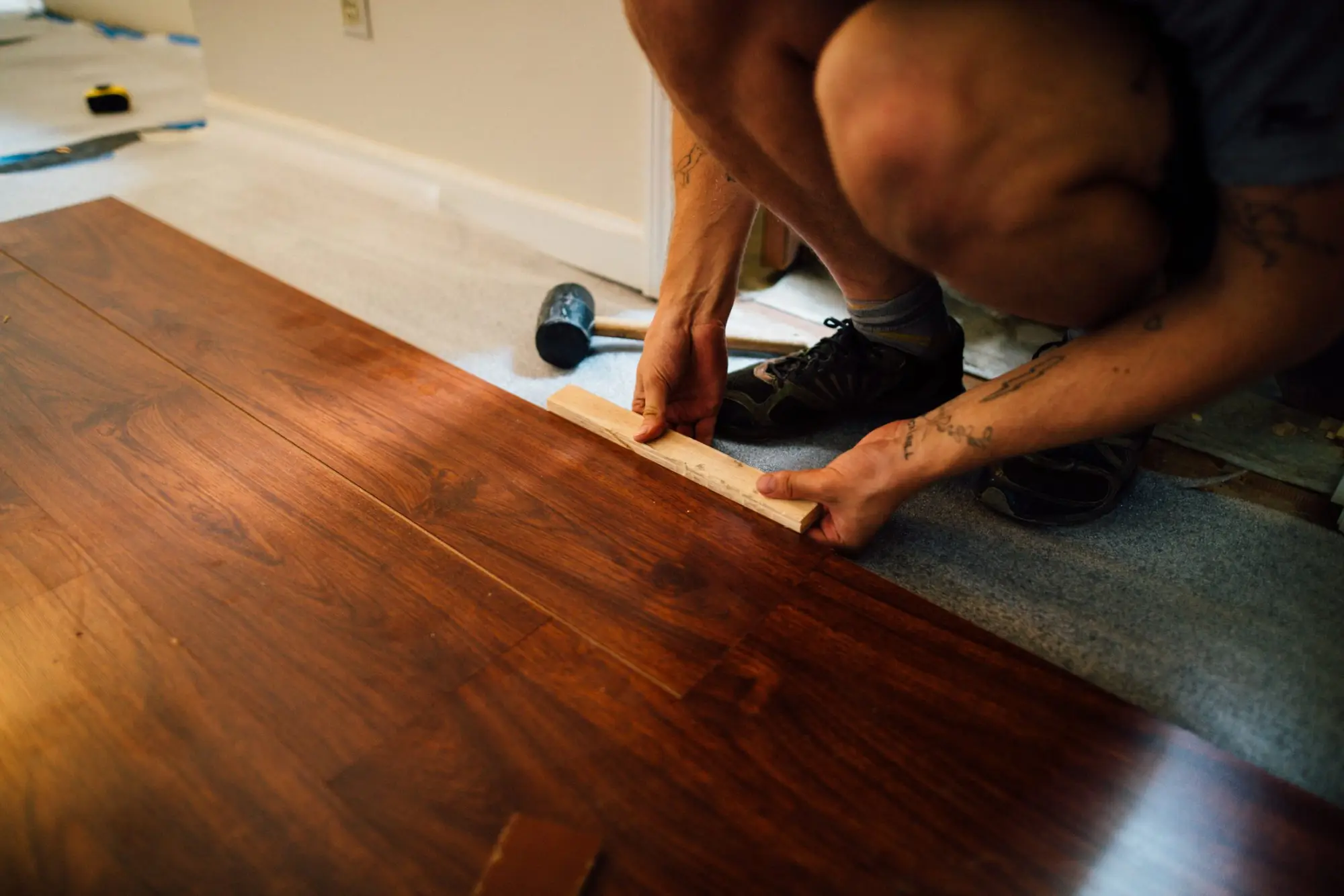
Reference image · Plank flooring being laid
Introduction
Lake Dallas is almost fully built, so most work here improves a house that already stands.
The town was named Garza when the Dallas and Wichita Railway came through in 1881, and took the name Lake Dallas after the first reservoir of that name was built in the late 1920s. That lake was Dallas’s main water supply for about thirty years, until the larger Garza-Little Elm reservoir, now Lewisville Lake, swallowed it in the 1950s. The city incorporated in 1965, after nearly ten years of dispute among residents.
Today the city covers 2.7 square miles and was close to 90 percent developed by 2018, so building here means infill and improvement. Around Main Street and Hundley Drive most houses date from the 1960s and 1970s and measure under 2,000 square feet. In the northwest, brick homes from the late 1980s onward run larger, and on the east side the old cottages sit closest to the lake and the Corps line.
At a glance
Lake Dallas at a glance.
Lake Dallas faces Little Elm across Lewisville Lake, joined to it by the toll bridge, and lies west of our McKinney studio.
- From our studio
- 17.2 miles west of our studio (about 21 miles by road)
- County
- Denton County
- ZIP codes
- 75065
- School districts
- Lake Dallas ISD
- Population
- 7,708 (2020 Census)
What we do here
What we do in Lake Dallas.
How each kind of work plays out in a small lake town with older houses and little open land.
Custom Homes
Infill homes on the few open lots and on sites where an old cottage comes down. Near the lake we check the Corps flowage contour and the floodplain before siting the house, and the demolition, the grading and the new home each take a city permit.
Remodeling
Additions and opened-up layouts for the 1960s and 1970s houses around Main Street and Hundley Drive, most of them under 2,000 square feet, where a rear addition or a joined kitchen and living room lets a small house fit a family.
Renovation
Bringing former weekend cottages up to full-time use with new wiring, plumbing and HVAC, each on a city permit, along with roofs, windows and insulation. Lake Dallas permits even a shingle replacement, so every trade goes into the application.
Kitchens & Baths
Kitchens and baths in small older houses, where a better layout matters more than added space. Any plumbing or electrical change needs a permit here, and Bureau Veritas carries out the inspections for the city.
Outdoor Living
New patios and patio covers, which the city reviews from a plot plan and building plans, and sheds or workshops that must match the house’s roof pitch and color. A pool, and even a pool repair, takes its own permit.
What to know
Building in Lake Dallas: what applies.
The points from the city’s permit pages and its comprehensive plan that most often change a design or a schedule here.
From the City of Lake Dallas and the Corps of Engineers
Permits at City Hall
Development Services at City Hall on Main Street issues residential permits, many of them over the counter. Pools and accessory structures can take up to ten business days of plan review, and work is not to start until the permit is issued, so the permit always comes before the crew.
Inspections by contract
The city has no building inspector on staff. Bureau Veritas performs all building inspections, and for electric and gas meter releases the city obtains a confirmation number from Oncor or Atmos Energy that the applicant passes on to the utility.
Contractor registration
Contractors register with the city every year, with registrations expiring each December 31; licensed electricians, plumbers and HVAC contractors are exempt under state law. An owner who lives in the house and claims a homestead exemption can do non-licensed work without registering, but still needs a permit.
Roofs and fences
Replacing roof shingles needs a permit, and so does any fence that is built, altered, repaired or replaced. Fences top out at six or eight feet depending on the zoning district; in front yards they are limited to three feet, or four for chain link, and may never be solid.
Sheds and accessory buildings
Accessory buildings need a permit before they are placed. They stay out of front yards, keep five feet from side and rear lines, rise no more than 15 feet (24 for an accessory dwelling), and match the house in roof pitch and color.
The Corps line
On the east side, private lots that run toward the water usually carry a Corps of Engineers flowage easement up to the 537-foot contour. No house may stand on it and no fill may be added, any other structure needs written Corps approval, and grading and fill need a city permit too.
Floodplain
Parts of the city around the lake and along its creeks lie in the floodplain. A planned extension of the northwest neighborhoods west of Meadowbrook Street stalled because the land sits in the 100-year flood zone, so we check flood maps before placing an addition or a new home.
Water, sewer and fire
Water and sewer come from the Lake Cities Municipal Utility Authority, formed in 1963 and shared with Hickory Creek and Shady Shores. Fire permits go to the Lake Cities Fire Department, and natural gas is supplied by Atmos Energy.
Neighborhoods
Lake Dallas, area by area.
The city’s comprehensive plan sorts its housing into a few areas, each with its own age and the work that suits it.
- The east side, near the lake
- Around Lakeview Drive, cottages and weekend houses that became full-time homes, with some newer infill between them. Renovation, system updates and replacement homes, each planned once the Corps line and floodplain are located.
- Lakebridge Estates
- A subdivision in the southeast of the city with detached homes, attached homes and apartments, laid out more conventionally than the cottage streets nearby. Kitchen and bath updates, patio covers and interior refreshes.
- Around Main Street and Hundley Drive
- The central area: mostly 1960s and 1970s houses under 2,000 square feet, mixed with apartments. Additions, opened layouts and new kitchens, close to the Main Street infill the city’s plan encourages.
- The northwest neighborhoods
- Brick homes of 2,000 square feet and more, built from the late 1980s into the 2010s, with sidewalks and no lots left to build on. Outdoor living, bath remodels and window replacement.
Lux Domus Builder
VI · How it unfolds
From the first visit in Lake Dallas to the keys.
01
Consultation
We meet at your home or lot in Lake Dallas, or at our McKinney studio, and talk through the brief, the timing and a budget range.
02
Design
Plans, structure and selections resolved in full, with the scope and price agreed, before work begins.
03
Approvals
Permits from the City of Lake Dallas and any HOA architectural review, prepared, submitted and followed through.
04
Build and handover
One managed schedule, regular site walks and plain updates, then a careful walkthrough and every punch-list item closed.
Questions
Building in Lake Dallas: questions.
Do I need a permit to replace my roof in Lake Dallas?
Yes. The city requires a permit just to replace roof shingles, as it does for any fence that is built, altered, repaired or replaced. When a roof is part of a renovation, we include it in the permit application along with the electrical, plumbing and mechanical work.
Can I replace an old lake cottage with a new house in Lake Dallas?
The demolition and the new home each need a city permit. On lots near the lake, the first step is a survey showing the 537-foot contour and the floodplain: the Corps allows no house on its flowage easement and no fill to raise the ground, so the buildable area can be smaller than the lot.
Who does building inspections in Lake Dallas?
Bureau Veritas, under contract with the city, which has no inspector on staff. Permits come from Development Services at City Hall, often over the counter, and fire permits from the Lake Cities Fire Department.
Can a homeowner pull a permit in Lake Dallas without registering?
Yes, if you live in the house and claim a homestead exemption on it, for work that does not require a state license. Contractors register with the city each year, apart from licensed electricians, plumbers and HVAC contractors, who are exempt under state law.
Nearby
Near Lake Dallas as well.
The closest places we serve, with miles from our McKinney studio. See every place on the map.

Handyman
Smaller jobs in Lake Dallas, booked online.
TV mounting, fixtures, doors, drywall, fences and the rest of the list, at upfront prices, in an arrival window you choose.
Nearby
- 18.2Hickory CreekCustom homes, remodeling and renovation in Hickory Creek · 18.2 miles west of our studio
- 19.4CorinthCustom homes, remodeling and renovation in Corinth · 19.4 miles west of our studio
- 17.8Shady ShoresCustom homes, remodeling and renovation in Shady Shores · 17.8 miles west of our studio
- 14.5Oak PointCustom homes, remodeling and renovation in Oak Point · 14.5 miles west of our studio
- 17.1LewisvilleCustom homes, remodeling and renovation in Lewisville · 17.1 miles southwest of our studio
- 14.8Cross RoadsCustom homes, remodeling and renovation in Cross Roads · 14.8 miles west of our studio
Lux Domus Builder
Begin with a conversation in Lake Dallas.
A private consultation is the first step of every project, whether you are planning a new home, reshaping the one you have or bringing it up to date.
Headquartered in McKinney, Texas (214) 892 5228 [email protected]